‘Polarised, Not Normalised’: Aga Ruhullah Accuses BJP of Creating Hostile Atmosphere for Kashmiris
By: News Desk | 20 October 2026
Srinagar: Srinagar Lok Sabha MP Aga Syed Ruhullah Mehdi has accused the Bharatiya Janata Party (BJP) of creating an increasingly hostile environment for Kashmiris both within Jammu and Kashmir and in other parts of the country, arguing that the political changes introduced in August 2019 have failed to deliver the normalcy and public confidence promised by the ruling party.
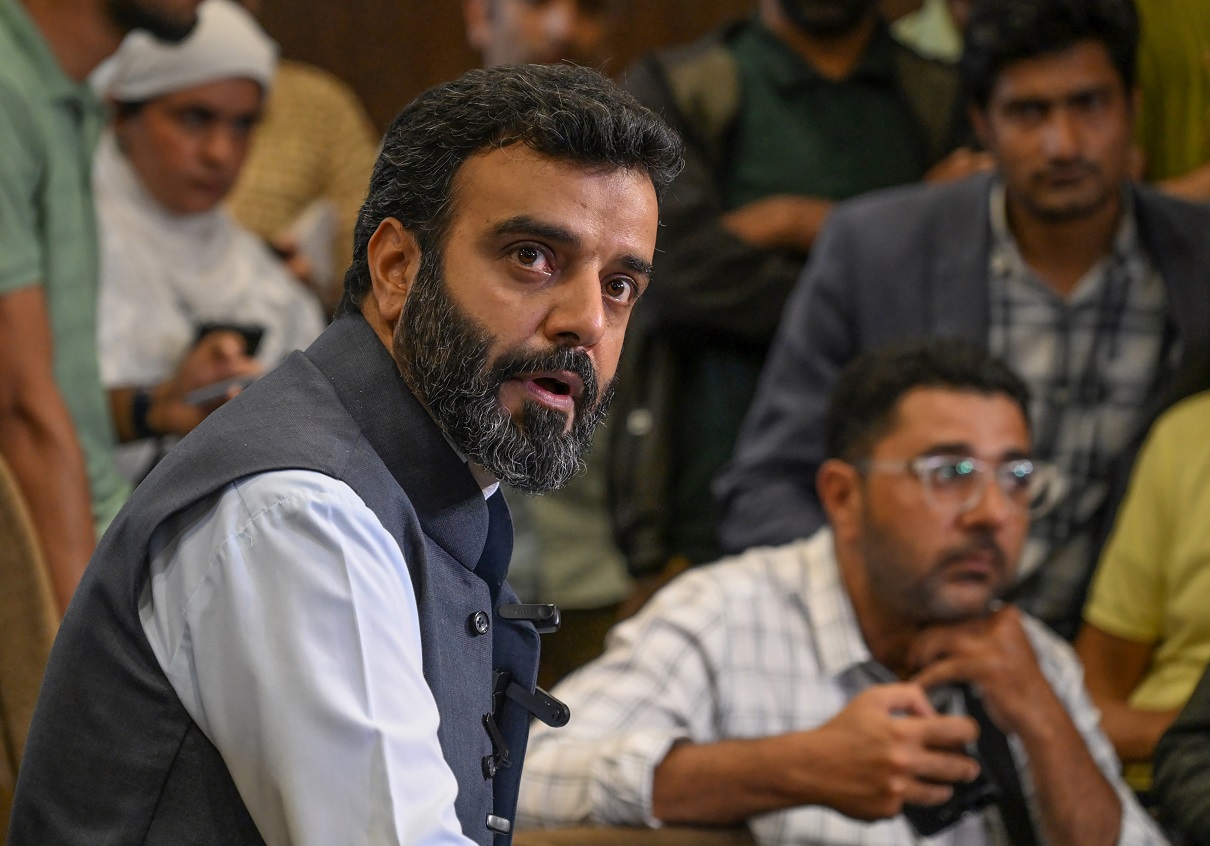
Speaking to reporters in Srinagar on Tuesday, the National Conference MP questioned the prevailing narrative of normalcy in the Union Territory, pointing to the alleged harassment of Kashmiris outside the region, verification procedures, prolonged detentions and restrictions on political expression.
“Instead of normalising Kashmir, it has been polarised,” Ruhullah said, reiterating his criticism of the BJP’s approach since the abrogation of Article 370.
His remarks came amid growing political debate over the treatment of Kashmiris travelling outside the Union Territory, following the recent attacks on Kashmir-bound buses in Haryana and Punjab. He also criticised the handling of protests against Chief Election Commissioner Gyanesh Kumar, called for a review of elections conducted under Kumar’s supervision and questioned the performance of the elected Jammu and Kashmir government on employment, reservations, constitutional guarantees and other public concerns.
Taken together, Ruhullah’s statements present a broader political argument: that security measures, constitutional changes and promises of development must ultimately be judged by whether people feel secure, represented and able to exercise their democratic rights.
Kashmiris Face Hostility Within and Outside J&K, Says Ruhullah
Ruhullah’s sharpest criticism was directed at what he described as a climate of suspicion surrounding people from Jammu and Kashmir.
He argued that Kashmiris were increasingly being treated as suspects in their own homeland while also facing hostility and stereotyping in other parts of India. He attributed this atmosphere to the BJP’s political approach following the August 2019 decision to revoke Jammu and Kashmir’s special constitutional status.
The MP cited the recent stone-pelting incident involving a Srinagar-bound bus in Haryana’s Karnal district as an example of the concerns confronting Kashmiris outside their home region.
The bus, operated by Star World Ventures, was attacked with stones and bricks near a dhaba on October 17. The driver alleged that the attackers called him a terrorist and objected to the presence of a Jammu and Kashmir-registered vehicle. Haryana Police, however, said the confrontation arose from a parking dispute. Two men were arrested in connection with the incident, and the investigation was continuing.
A second bus operated by the same company was attacked with stones near Doraha in Punjab’s Ludhiana district on October 18. No injuries were reported in that incident, although a windowpane was damaged and passengers were frightened.
The incidents prompted political condemnation and renewed calls for stronger protection for Kashmiri travellers.
For Ruhullah, the attacks raise questions about the broader atmosphere in which Kashmiris live and travel. However, the motive behind the Karnal incident remains disputed, and investigators have not established that the two attacks were part of a coordinated campaign against Kashmiris.
That distinction is important. The allegations of identity-based hostility deserve scrutiny, but the conclusions must rest on evidence gathered through police investigations.
Article 370 Abrogation: Six Years On, the Debate Remains Unsettled
At the centre of Ruhullah’s criticism is the constitutional reorganisation of Jammu and Kashmir in August 2019.
On August 5, 2019, the Union government moved to end the region’s special constitutional status under Article 370. Jammu and Kashmir was subsequently reorganised into two Union Territories: Jammu and Kashmir, and Ladakh.
The decision marked a fundamental change in the region’s constitutional and political relationship with the Union government. It also became one of the most contested decisions in contemporary Indian politics, with supporters emphasising integration, security and development, while critics raised concerns about federalism, political representation and the loss of constitutional safeguards.
The Supreme Court upheld the Union government’s decision to abrogate Article 370 in December 2023, while also directing that steps be taken towards restoring Jammu and Kashmir’s statehood and that assembly elections be held. The constitutional dispute and the political debate surrounding the decision are distinct: the court’s ruling settled the legal challenge to the abrogation, but it did not eliminate disagreements over its political consequences.
Ruhullah has maintained that merely acknowledging the August 5 decision as wrong is insufficient. He has called on political parties to explain what concrete steps they intend to take to reverse the changes and restore constitutional guarantees.
“Everyone knows that the decision of August 5 was wrong. What are we doing to reverse that decision?” he asked in remarks reported from Srinagar.
His criticism also extends to the National Conference’s own political commitments. Although the party has made the restoration of Jammu and Kashmir’s special status and statehood central to its political position, Ruhullah has questioned whether enough has been done to pursue those objectives.
This places him in a complicated political position. As a National Conference MP, he shares the party’s stated opposition to the 2019 changes, but he has also criticised the elected government led by Chief Minister Omar Abdullah for what he considers insufficient progress on key promises.
His intervention therefore reflects not only opposition to the BJP’s Kashmir policy but also growing pressure on the regional leadership to demonstrate tangible results.
Verification Drives and Detentions Raise Questions Over Civil Liberties
Ruhullah also criticised what he described as a continuing “verification regime” in Jammu and Kashmir, arguing that residents should not have to live under a constant presumption of suspicion.
He cited verification procedures, restrictions and the detention of people without trial as examples of what he sees as an unresolved civil-liberties problem in the region.
The MP also raised concerns about prisoners from Jammu and Kashmir who, he alleged, have remained incarcerated for prolonged periods without trial. He questioned whether the treatment of residents was consistent with the claims of normalcy frequently made by the authorities.
The allegations raise questions that extend beyond party politics. Preventive detention and criminal detention are governed by different legal provisions, and the circumstances of individual cases can vary significantly. A person held under preventive-detention legislation is not necessarily in the same legal position as an undertrial facing criminal charges.
Consequently, the number of detainees, the legal grounds for their detention, the duration of custody and the status of individual cases must be established through reliable records before broad conclusions can be drawn.
Nevertheless, the wider principle is clear: detention must operate within the law, access to judicial remedies must remain meaningful, and allegations of prolonged incarceration without a fair opportunity to contest detention warrant serious examination.
For critics of the post-2019 administrative framework, the concern is that extensive security and verification measures can weaken public confidence if residents believe that restrictions are arbitrary or that they have limited avenues for challenging them.
The government and security agencies, meanwhile, have historically defended security measures in Jammu and Kashmir on grounds including counterterrorism and public order. Evaluating those arguments requires examining both the security rationale and the impact of the measures on ordinary residents.
Ruhullah’s criticism places the burden on the authorities to demonstrate that security procedures are lawful, proportionate and subject to appropriate oversight.
Ruhullah Backs Protests Over Election Commission Accountability
Ruhullah also turned his attention to the protests demanding accountability from Chief Election Commissioner Gyanesh Kumar, describing demonstrations by students, activists and concerned citizens as an attempt to reclaim democratic space.
The protests have centred on allegations concerning electoral-roll revisions, the functioning of the Election Commission and the Special Intensive Revision (SIR) exercise. Critics have questioned whether the revision process could lead to eligible voters being excluded, while the Election Commission’s position has been that electoral-roll revision is necessary to improve accuracy and remove errors.
These are consequential questions because electoral rolls determine who can exercise the right to vote. Any revision process must therefore balance the need to eliminate duplicate or otherwise ineligible entries with safeguards against the wrongful removal of eligible electors.
Ruhullah argued that public demonstrations seeking accountability should be understood as an exercise of democratic rights rather than simply a law-and-order problem.
His comments came amid a series of protests in Delhi against Kumar and the Election Commission. Reuters reported on October 10 that authorities detained more than 2,000 protesters during a major operation to prevent a rally organised by a youth movement demanding the CEC’s resignation. The demonstrations were linked to allegations of irregularities in voter-list revision, which the ruling BJP has denied were politically motivated.
Ruhullah criticised the restrictions imposed on protesters, drawing a comparison with measures that people in Kashmir have experienced over the years.
He said the restrictions in Delhi reminded Kashmiris of the curbs, detentions and internet shutdowns they had experienced on a much larger scale.
The comparison reflects his broader political argument that restrictions on public assembly should concern citizens regardless of where they occur. It also highlights the tension between the state’s responsibility to maintain public order and the constitutional right to peaceful protest.
Authorities may impose lawful restrictions in particular circumstances, but the justification for those restrictions, their proportionality and the availability of avenues for peaceful dissent remain important tests of democratic governance.
Seeks Review of Elections Held Under Gyanesh Kumar
In another significant part of his remarks, Ruhullah called for elections conducted under Gyanesh Kumar’s supervision to be revisited and reviewed.
According to reporting by Kashmir Observer, the Srinagar MP said that if allegations against the Chief Election Commissioner were established, criminal proceedings should follow and elections held during his tenure should be examined.
The distinction between an allegation and an established finding is essential in this matter. Ruhullah’s demand represents his political position; it does not establish that the Chief Election Commissioner has committed a criminal offence or that elections conducted under his supervision were invalid.
Any legal proceedings would require evidence and the application of the relevant law. Similarly, reviewing an election is not the same as automatically declaring its result void. Election disputes are governed by specific legal procedures, and challenges to individual results must satisfy the applicable requirements.
The demand nevertheless raises a broader question about institutional accountability: how should concerns regarding electoral administration be investigated, and what mechanisms should be available when political parties or citizens believe the electoral process has been compromised?
For the Election Commission, credibility depends not only on conducting elections according to established procedures but also on public confidence that complaints are examined impartially and that eligible voters are protected.
For critics, transparency and independent scrutiny are necessary to maintain that confidence.
Ruhullah’s intervention places him among the voices demanding a stronger response to the allegations surrounding electoral-roll revision and the Commission’s functioning. The claims must, however, be assessed through documentary evidence, official responses and the appropriate legal processes.
‘Democracy Has Been Suppressed’: Ruhullah Questions Restrictions on Protest
Reflecting on the demonstrations in Delhi, Ruhullah said democracy had been suppressed over the previous decade and that recent protests represented an attempt by citizens to reclaim their right to expression.
He described the participation of students, activists and concerned citizens as a source of hope, while cautioning that democratic institutions could not be considered fully healthy merely because people had begun taking to the streets.
The significance of his remarks lies in the connection he draws between electoral accountability and the right to protest.
Elections are one of the principal mechanisms through which citizens influence government. Peaceful demonstrations, public debate, independent reporting and judicial review provide additional ways to question decisions and demand accountability.
When authorities restrict protests, the central issue is not simply whether a demonstration was allowed to proceed. It is whether restrictions were legally justified, whether less restrictive alternatives were available and whether citizens retained meaningful opportunities to express dissent.
The comparison with Kashmir is politically charged because restrictions on movement, communications and assembly have been recurring subjects of debate in the region since 2019.
However, the conditions surrounding protests in Delhi and the security circumstances in Jammu and Kashmir are not identical. Their similarities and differences must be assessed on the evidence rather than assumed.
Ruhullah’s argument is that democratic freedoms should not be treated as exceptional privileges available only when public dissent is convenient for those in power.
Employment, Reservations and Electricity: Ruhullah Questions the Elected Government
Ruhullah’s criticism was not confined to the BJP or the Union government. He also questioned the performance of the elected Jammu and Kashmir administration, arguing that people remain disappointed over employment, reservations, electricity supply, student concerns, medical interns’ grievances and the protection of local interests.
The intervention is politically significant because the National Conference returned to power in Jammu and Kashmir after the 2024 Assembly elections, campaigning on a range of political and governance commitments.
For residents, however, the value of an electoral mandate is measured partly through everyday outcomes: access to employment, reliable public services, fair recruitment procedures, educational opportunities and the ability to plan their futures with greater certainty.
Ruhullah asked what tangible progress had been achieved on the issues that had shaped public expectations.
His criticism of the elected government suggests that constitutional questions alone will not determine public satisfaction. Even voters who support the restoration of statehood or stronger constitutional protections may judge the administration on its performance in areas such as jobs, electricity and education.
Employment is particularly sensitive in Jammu and Kashmir, where government recruitment, reservations and access to secure work have generated sustained public debate. Students and job seekers often view recruitment delays, changing rules and unresolved reservation questions as issues with direct consequences for their future.
Medical interns and other young professionals have also raised concerns about working conditions, remuneration and career prospects.
Assessing the government’s performance requires examining official employment data, recruitment schedules, electricity-supply records and the implementation of policy commitments. Ruhullah’s criticism is a political assessment, not a substitute for those measurements.
Still, his intervention highlights a challenge for the elected administration: public expectations cannot be met through political assurances alone. They require visible progress, transparent decisions and regular communication about what has been achieved and what remains unresolved.
The Political Tension Within the National Conference
Ruhullah’s remarks also underline the complicated relationship between regional political aspirations and the practical limits of governance under the current constitutional arrangement.
The National Conference has advocated the restoration of statehood and challenged the loss of Jammu and Kashmir’s former special status. The party now also faces the responsibility of governing within the existing framework while negotiating with the Union government on issues that remain outside the direct control of the regional administration.
Ruhullah’s criticism suggests that he is unwilling to allow the constraints of governance to become a reason for lowering political expectations.
His demand for concrete action on Article 370, alongside his criticism of the elected government on employment, reservations and public services, puts pressure on the party to demonstrate progress on both its constitutional agenda and its everyday governance commitments.
For the BJP, the central argument has been that the 2019 changes strengthened integration and created conditions for development and improved security. Critics such as Ruhullah contend that constitutional centralisation has deepened alienation and weakened public confidence.
These competing narratives cannot be resolved through political statements alone. They require scrutiny of security outcomes, economic indicators, civil-liberties practices, public-service delivery and the extent to which people feel represented in decisions affecting them.
The question is not merely which party offers the more persuasive slogan. It is whether the governing framework delivers measurable improvements while protecting constitutional rights and democratic participation.
What Ruhullah’s Remarks Mean for Kashmir’s Political Debate
Ruhullah’s statements bring together several issues that are often discussed separately: the safety of Kashmiris outside their home region, the legacy of Article 370’s abrogation, detention and verification practices, electoral accountability and the performance of the elected government.
His central claim is that these issues point to a deeper problem of trust between the people of Jammu and Kashmir and the institutions governing them.
The recent bus attacks have given that argument an immediate human dimension. For passengers travelling between Delhi and Srinagar, the most pressing concern is straightforward: they should be able to complete their journeys without fear of violence or intimidation.
For those examining Kashmir’s political future, the wider questions are more complex. How can the authorities strengthen public confidence while maintaining security? What practical steps can address concerns over civil liberties? How should the elected government pursue its political promises while delivering jobs and reliable public services? And what safeguards are needed to ensure that electoral processes remain transparent and credible?
There are no simple answers, and political accusations do not by themselves establish responsibility for every problem cited.
But the questions raised by Ruhullah are unlikely to disappear while the disputes over constitutional status, statehood, detention, employment and democratic representation remain unresolved.
The immediate responsibility of the authorities is to investigate the attacks on Kashmir-bound buses, establish the facts and ensure that those responsible face the law. The broader responsibility is to ensure that residents of Jammu and Kashmir, like citizens elsewhere in India, can exercise their rights without discrimination and participate in public life without fear.
Ultimately, the credibility of any claim of normalcy will depend on more than official declarations. It will depend on whether people experience greater security, fair treatment, accountable institutions and tangible improvements in their daily lives.